
Joydeep Hazra
Project Lead · Compassion8Innovation
Brian Seong
UW GIX Lead · University of Washington
Brian Ho
NEU Lead · Northeastern University
This white paper presents a comprehensive 5G-As-A-Service wireless network design for a hypothetical Mars research base, modelled on the MARS Desert Research Station (MDRS). The project investigates what it would take to provide reliable indoor and outdoor connectivity for a 7-person crew across a multi-module habitat — supporting safety-critical sensors, biometric monitors, scientific equipment, and Earth communications — all under the severe constraints of Martian distance, power limits, and atmospheric conditions.
Problem Statement
Future Mars missions will require sustained human presence in isolated habitats — with no viable option to call in IT support, replace failed equipment easily, or rely on Earth-based cloud infrastructure. Any network solution must operate reliably in an environment defined by extreme power constraints, severe atmospheric conditions, and the constant threat of equipment failure, all while keeping mission-critical safety systems online at all times.
The challenge is designing a network that provides crew safety, scientific productivity, and Earth communication connectivity — using hardware that can physically survive the journey to Mars and function indefinitely with minimal maintenance.
Project Goals
- 1Design a comprehensive wireless network solution for a hypothetical Mars research base using low-band 5G technology.
- 2Ensure connectivity for all devices and sensors across indoor habitat modules and outdoor rover activities.
- 3Integrate the indoor network with the broader Mars communication infrastructure, including relay satellites for Earth communication.
- 4Build a client application to monitor network status, bandwidth usage, and device health in real time.
Key Challenges & Considerations
Technical Challenges
- Limited power supply — all equipment must operate within strict energy budgets.
- Limited weight capacity — hardware must be light enough to transport aboard a spacecraft.
- Non-habitable atmosphere — equipment must withstand Martian atmospheric conditions including radiation exposure.
- Always-on Safety Critical Element (SCE) sensors must never lose connectivity.
- Restrictive habitat building structure limits wireless signal propagation paths.
Non-Technical Challenges
- Limited clarity on detailed requirements — the Mars base scenario required substantial inference and assumption.
- No real-world Mars environment to test against — simulation was the only validation option.
Overcoming the Challenges
- Applied Requirements Engineering to formalise and fill gaps in the specification.
- Explored existing NASA research and MARS Society documentation as primary reference sources.
Research Foundation
The project drew on three primary research domains to ground its design decisions in real-world data and established Mars exploration plans.
- Mars Exploration Program Future Plan
- Human Exploration of Mars Design Reference Architecture 5.0 and its addendum
- MARS Desert Research Station (MDRS) — used as the physical reference model for the indoor campus
- Various academic papers and technical books on 5G spectrum and deployment
- Industry expert training sessions on 5G network design
Communication Architecture
The network is structured in two layers: an outdoor system connecting the habitat campus to rovers and the Earth relay infrastructure, and an indoor system serving all devices within the habitat modules. Both layers connect through a central Network Core with a firewall boundary separating internal traffic from the Mars Relay Network Satellites (MARSAT).
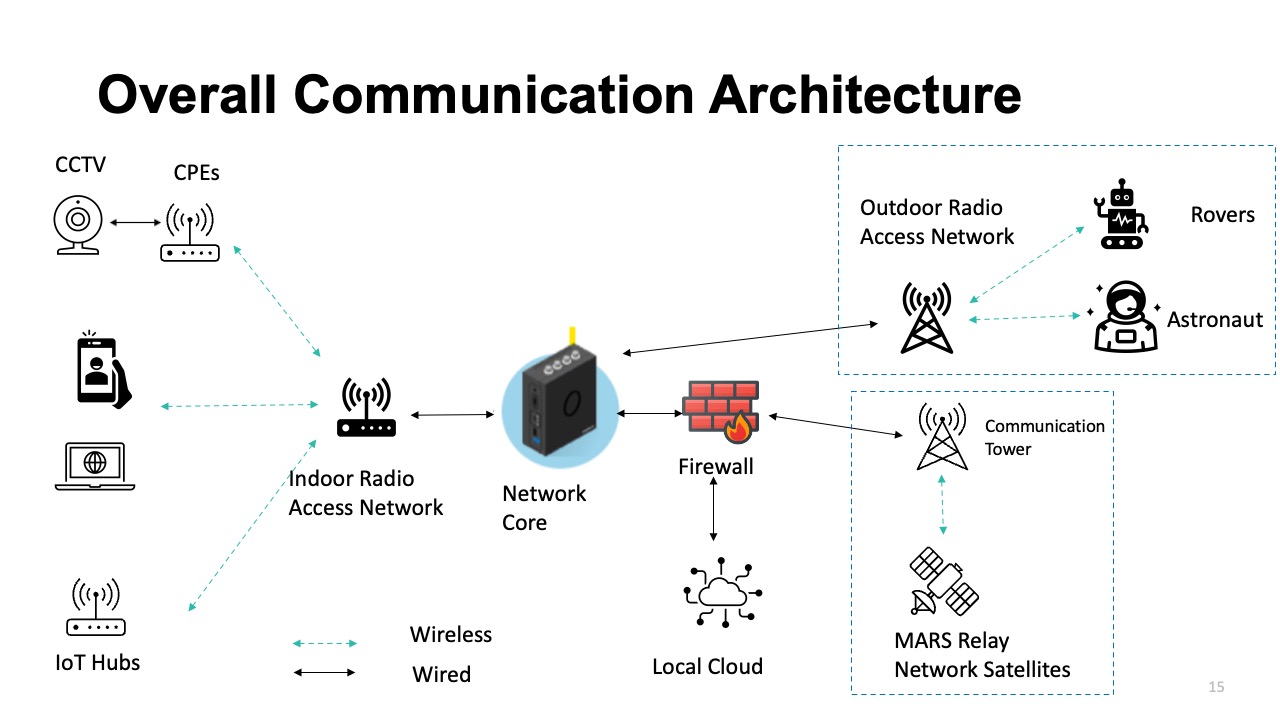
Figure 1: Overall Communication Architecture
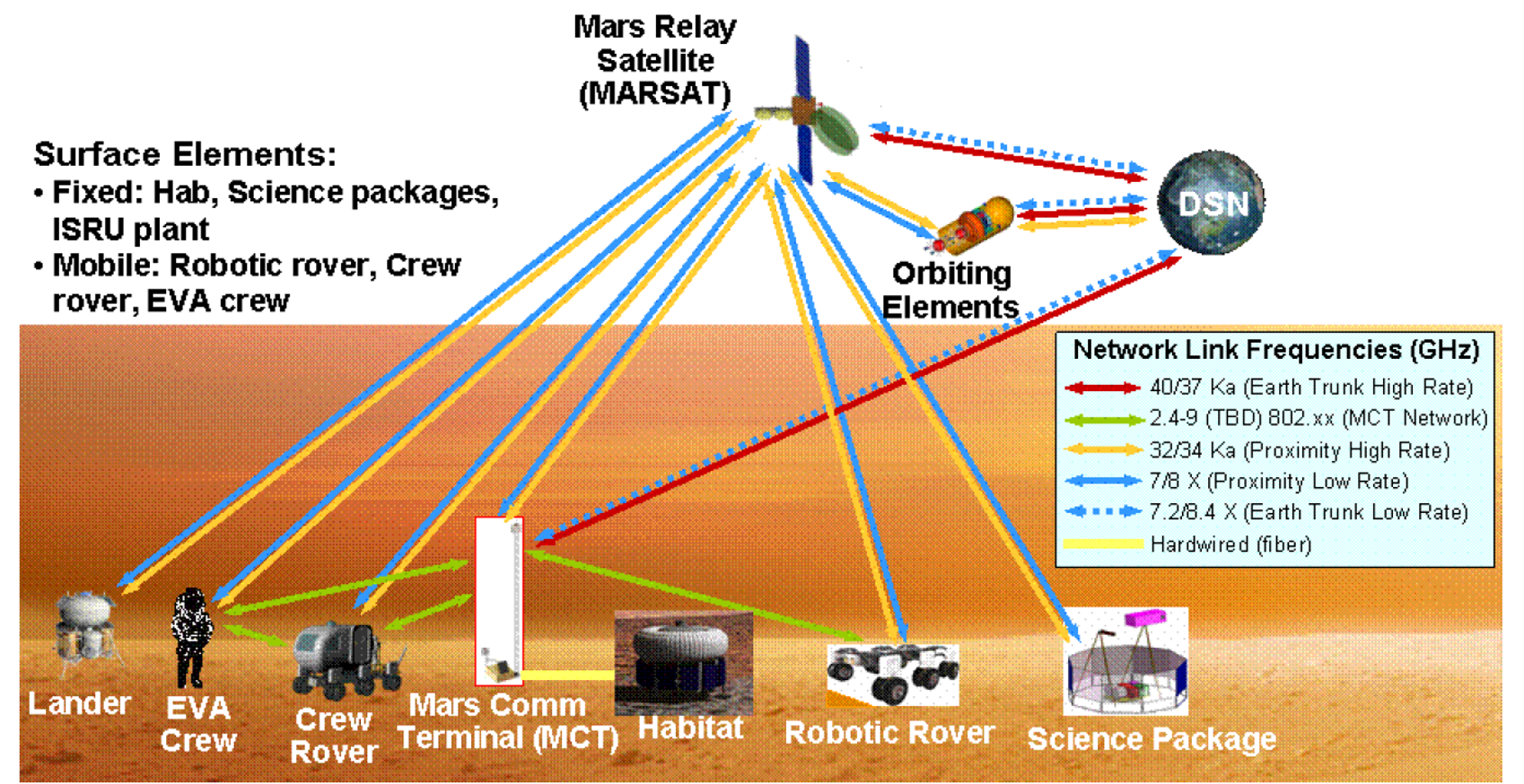
Figure 2: Reference MARS Communication Architecture
Mars Architecture Steering Group. Human Exploration of Mars Design Reference Architecture 5.0 Addendum. NASA, 2009.
Outdoor Solution
The outdoor network must support rover operations ranging 50–100 miles from the habitat, while fitting within the spacecraft's strict power and weight budget. After evaluating high, mid, and low 5G frequency bands, low-band 5G (<1 GHz) was selected — the only band offering adequate range at the power and weight constraints of Mars deployment.
Low-band 5G
Technology
50 – 100 miles
Coverage radius
600W
Max power
23 kg
Antenna weight
Reference product: Ericsson Antenna 1002 1L 0M 2.4M — selected to validate real-world power and weight figures.
Indoor Solution
The indoor network is modelled on the MARS Desert Research Station (MDRS) in Utah — the most established Mars analogue habitat operated by the Mars Society. The campus comprises six interconnected modules, each serving a distinct mission function.
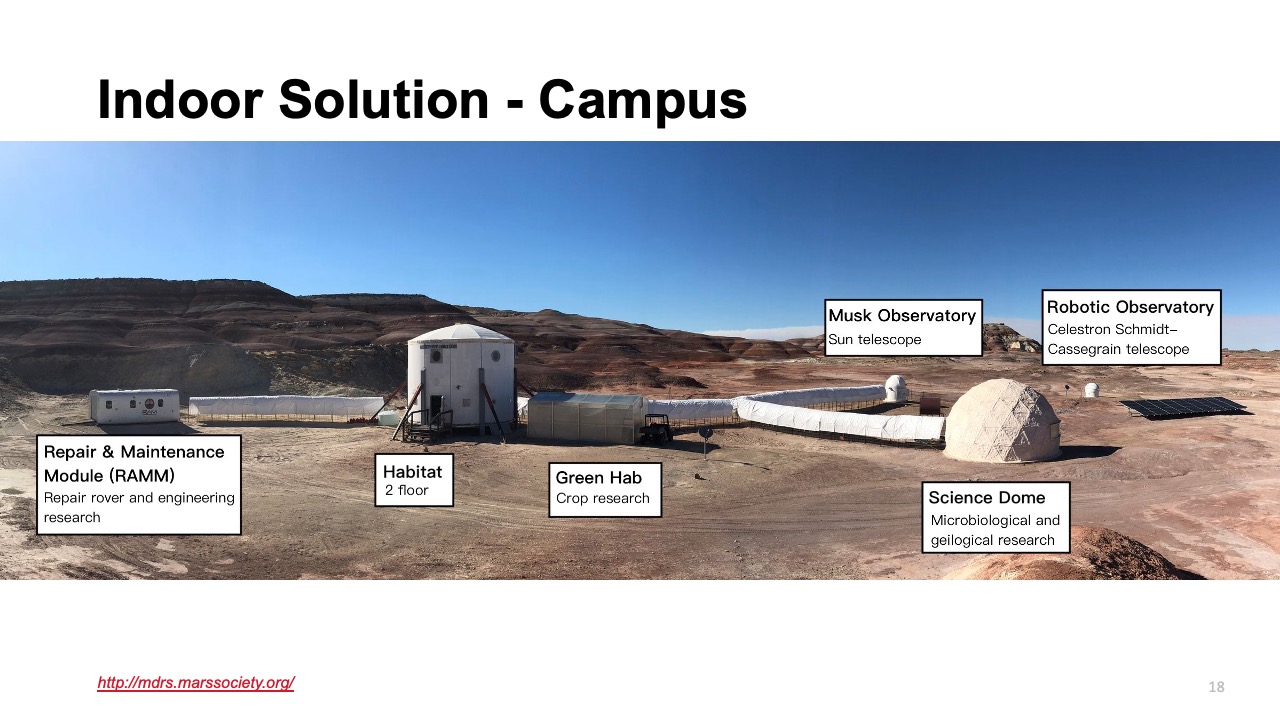
Figure 3: Indoor Solution Campus — MARS Desert Research Station (MDRS)
Source: http://mdrs.marssociety.org/
Habitat
2-floor crew living quarters
RAMM
Repair & Maintenance Module — rover and engineering repair
GreenHub
Crop research and food production
Musk Observatory
Sun telescope and astronomical observation
Robotic Observatory
Celestron Schmidt-Cassegrain telescope
Science Dome
Microbiological and geological research
Connected Devices
Eight device types are connected across the campus, covering environmental safety, crew health, surveillance, and agricultural monitoring.
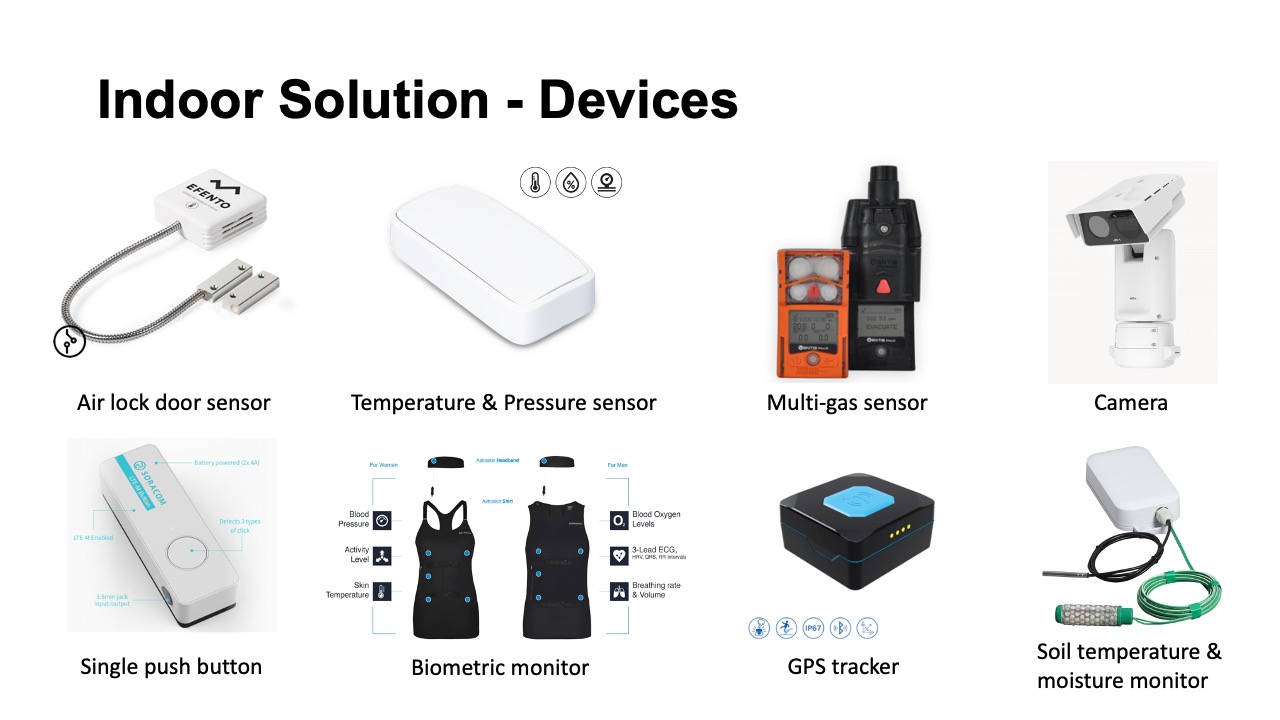
Figure 4: Connected Devices — air lock sensors, biometric monitors, GPS trackers, and environmental sensors
Air lock door sensor
Entry/exit monitoring and safety
Temperature & Pressure sensor
Habitat environmental monitoring
Multi-gas sensor
Atmosphere composition monitoring
Camera (CCTV)
Surveillance and safety monitoring
Single push button
Emergency alert system
Biometric monitor
Crew health tracking (heart rate, blood pressure, blood oxygen)
GPS tracker
Crew and rover location tracking
Soil temperature & moisture monitor
GreenHub agricultural monitoring
Bandwidth Requirements
Total bandwidth demand was calculated per device category. The indoor network must sustain a peak throughput of 500 Mbps, driven primarily by CCTV surveillance requirements.
| Device Category | Count | Per Device | Total |
|---|---|---|---|
| Sensors (Temperature, Pressure, Gas) | 100 | 10 Kbps | 1 Mbps |
| CCTV | 10 | 15 Mbps | 150 Mbps |
| Astronaut Personnel Locator | 7 | 300 Kbps | 2 Mbps |
| Astronaut Personnel Device (bio monitor, comms) | 7 | 10 Mbps | 70 Mbps |
| Laptops | 7 | 20 Mbps | 140 Mbps |
| Lab Devices | 10 | 10 Mbps | 100 Mbps |
| Total Bandwidth Required | 500 Mbps | ||
Network Simulation
Using Eino AI — a commercial 5G network planning tool — the access point layout was simulated across the MDRS campus topology. The simulation validated coverage across all six modules and confirmed that the proposed AP placement provides adequate signal strength throughout the habitat.
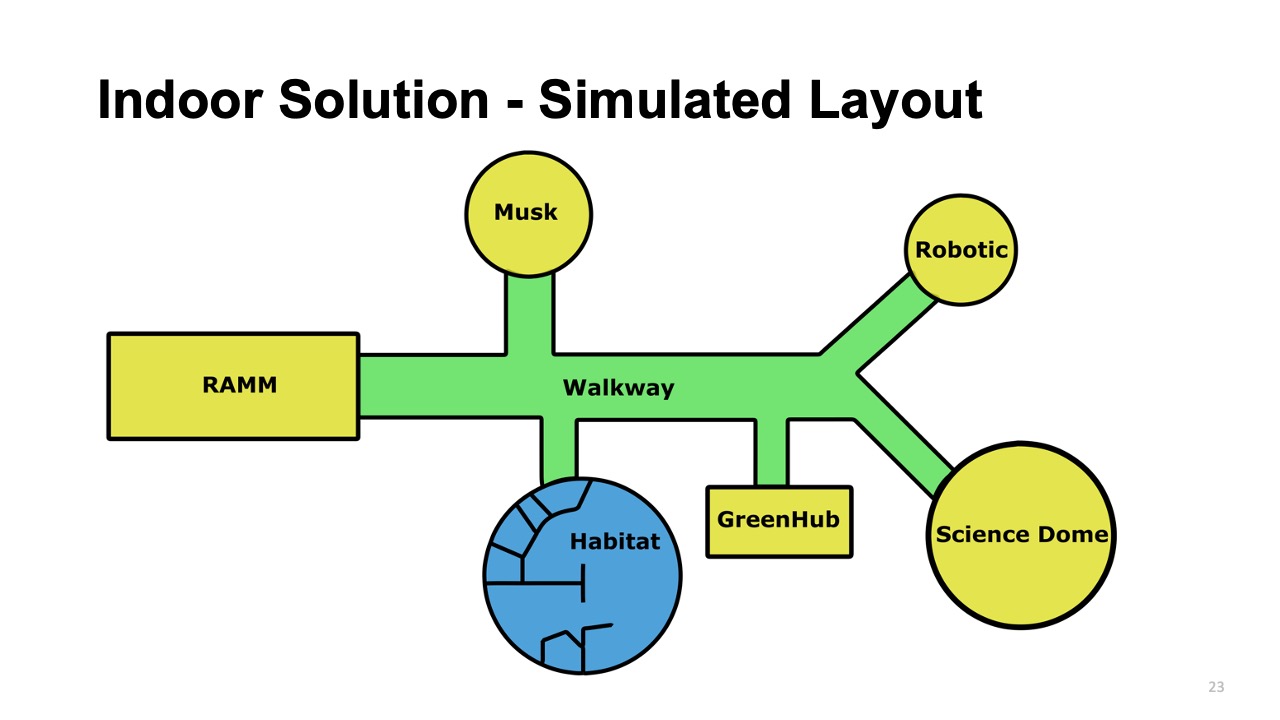
Figure 5: Campus module topology — RAMM, Habitat, GreenHub, Observatories, and Science Dome connected via the central walkway
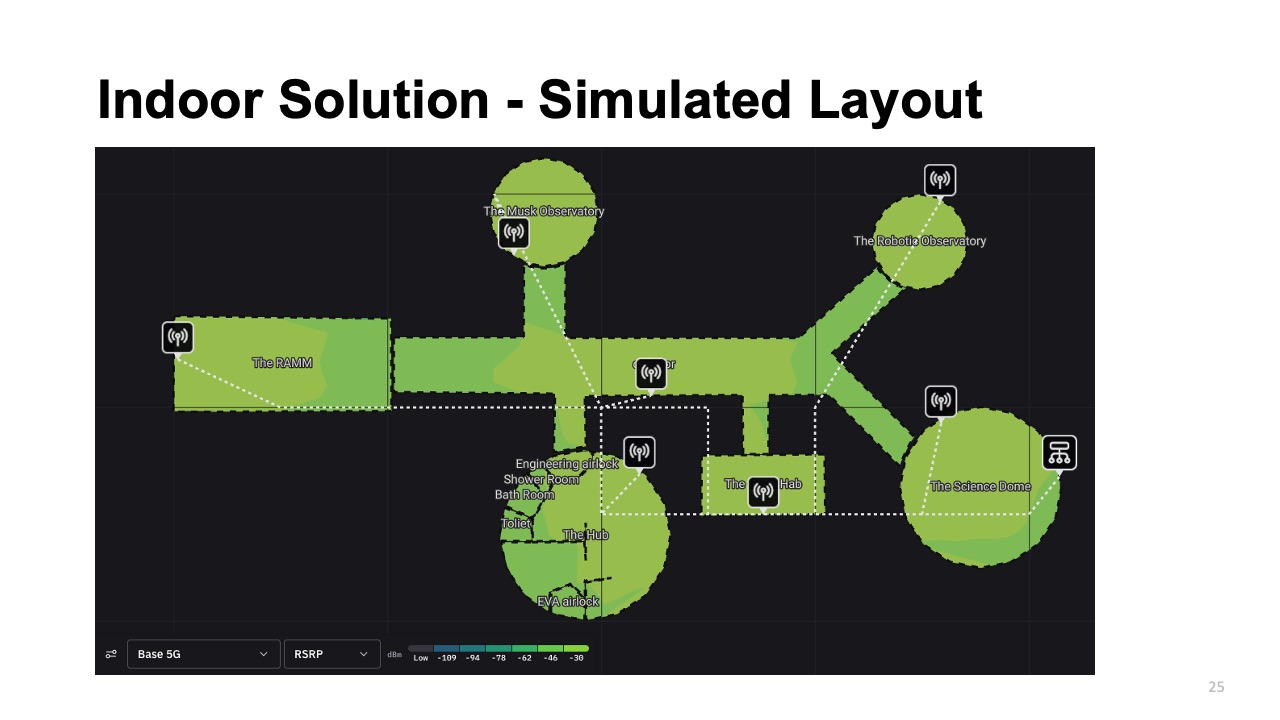
Figure 6: Eino AI 5G coverage simulation — signal strength heatmap confirming comprehensive indoor coverage across all modules
Monitoring Dashboard
A React-based monitoring dashboard was built to provide crew and mission controllers with real-time visibility into network health. The dashboard surfaces the metrics most critical for daily operations in an isolated environment.
AI-powered 4G/5G network planning tool used to simulate indoor signal coverage and validate access point placement across the MDRS campus layout.
Designed the network performance dashboard UI prototype — layout, data visualisations, and alert panels.
Built the demo front-end for the monitoring dashboard, displaying real-time network metrics and device health.
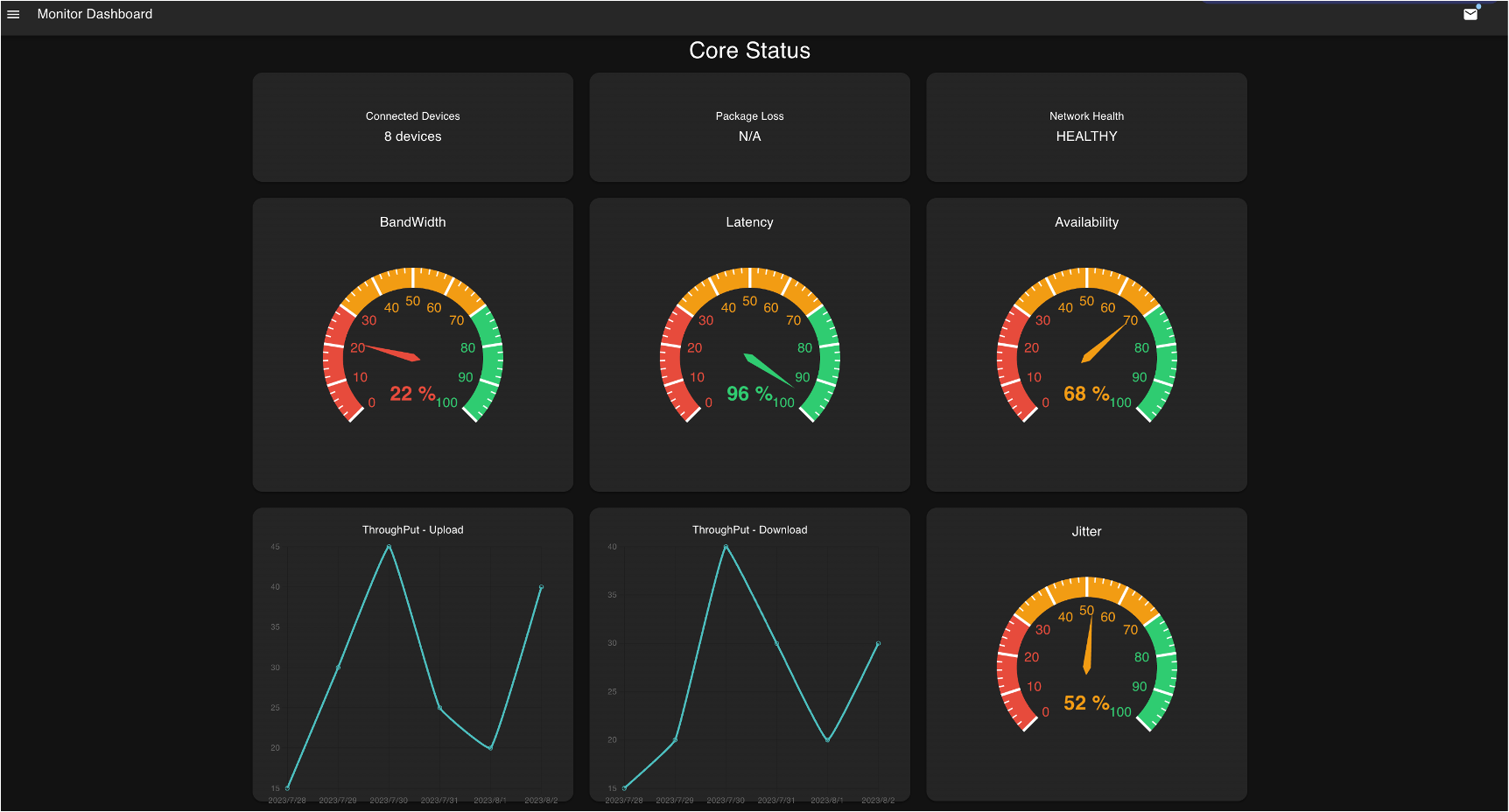
Figure 7: Network monitoring dashboard — bandwidth, latency, and device health
Future Development
Several dimensions of the design require further research before the system could be considered operationally viable for a real Mars mission.
Availability & Redundancy
Define formal redundancy requirements to ensure the network maintains 24/7 uptime — critical for life-support-connected Safety Critical Elements.
AI-Assisted Maintenance
Explore an AI assistant for operation and maintenance support, capable of diagnosing network issues and recommending interventions without requiring Earth-based IT support.
Outdoor Coverage Validation
Conduct a full outdoor design coverage check across the proposed 50–100 mile rover operation radius using terrain simulation data from NASA/JPL-Caltech satellite imagery.
Project Presentation
More Research
Airlume: Improving School Air Quality Through Service and Data Analysis
September 30, 2024
A white paper that examines how school air quality can be improved through integrated sensing, filtration, and dashboard analytics. The project frames indoor air health as an operational education issue, linking environmental monitoring to student well-being, attendance, and learning outcomes.
Read Full PaperProject Sentinel: A Modular, Offline-First Edge AI Framework for Community Infrastructure Security and Environmental Monitoring
September 3, 2025
A multi-year open research initiative designing, building, and validating a privacy-first, fully offline edge AI platform for under-resourced environments. Project Sentinel investigates whether modular, self-healing AI infrastructure can provide meaningful network security, environmental monitoring, and community resilience — running on low-cost hardware with no cloud dependency.
Read Full PaperAI Data Centres: The New Backbone of National Competitiveness
November 19, 2025
Traditional data centres were built for CPU workloads and modest cooling demands — AI has overturned that logic entirely. This article examines how GPU clusters, liquid cooling, and ultra-fast fabrics are redefining data centre architecture, and proposes a three-tier taxonomy alongside a strategic framework to help governments and corporations scale AI infrastructure responsibly.
Read Article